Swing-stage access for facade work on NYC buildings, with OSHA-trained crews who follow OSHA and DOB rules and $2M in coverage.
Suspended scaffolding hangs a work platform from the roof, so crews on a mid- or high-rise start at the wall and skip the tower that supported scaffolding would need from the street. As an NYC scaffolding company since 2004, we install suspended scaffolding in NYC for Local Law 11 repairs, masonry restoration and window and glass replacement. Our work is installation and removal on NYC buildings. Equipment sales sit outside what we do.
Jobs that call for a hanging platform:
Each group arrives with a different question about what is legal, who can do the work and who files.
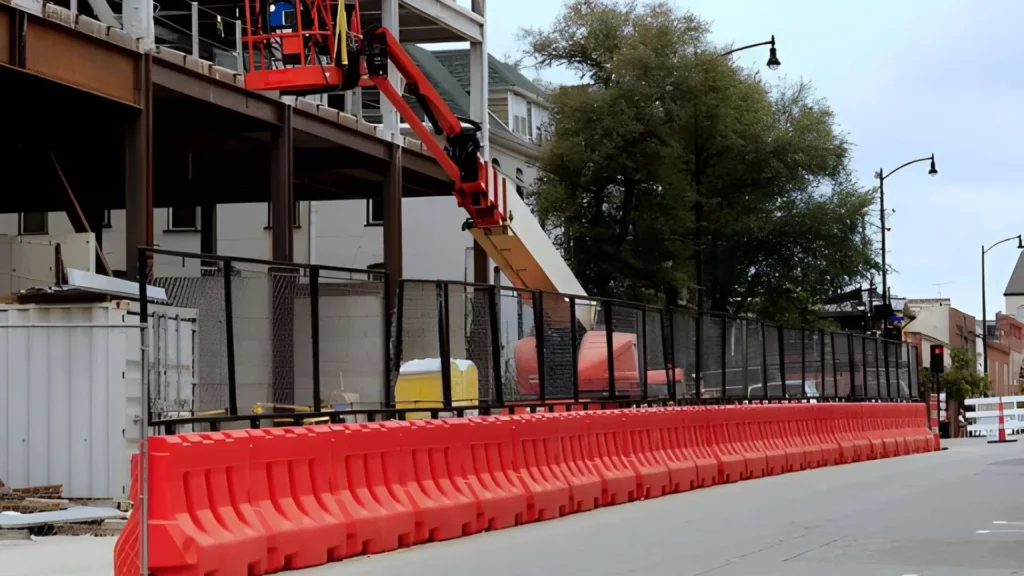
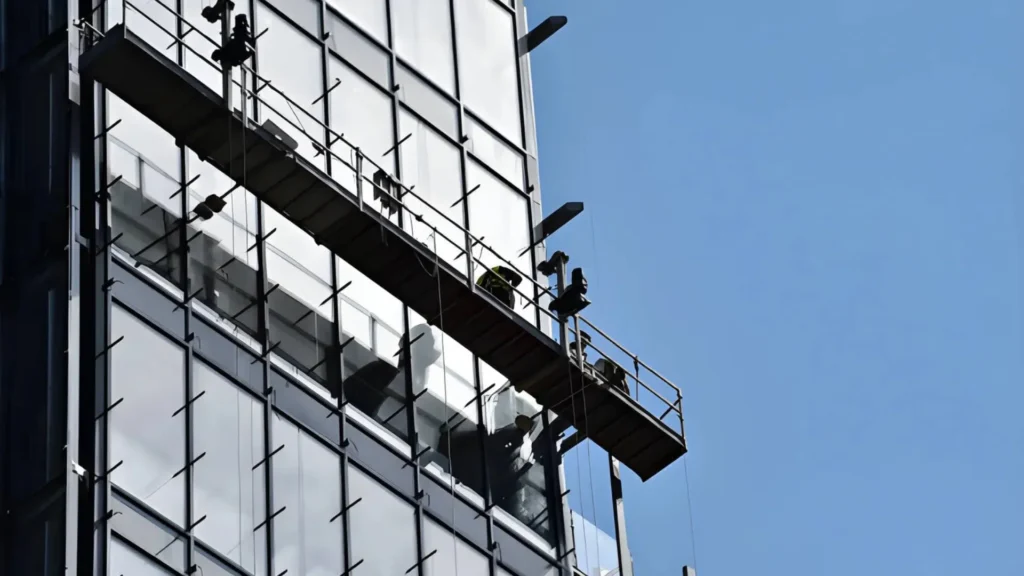
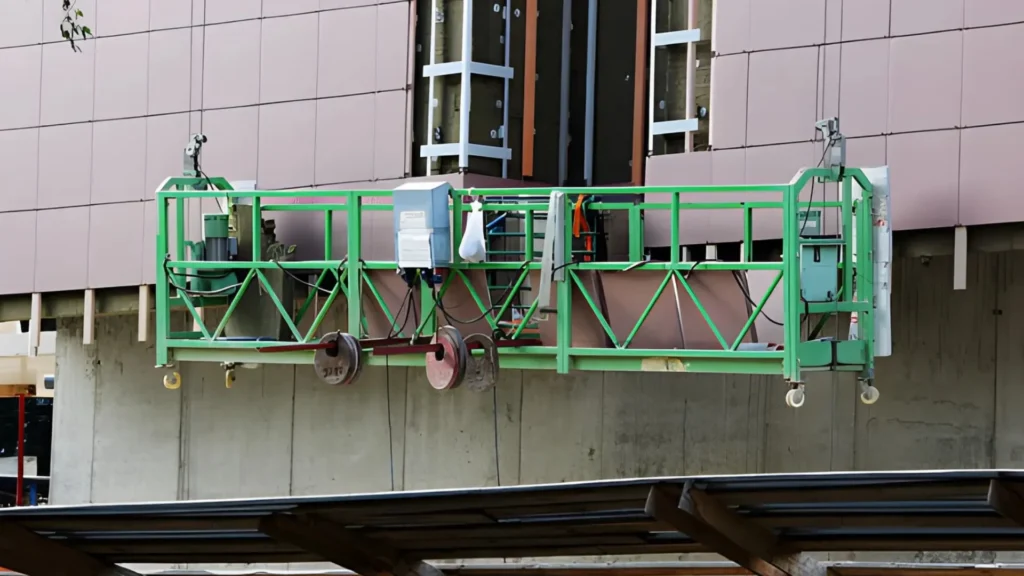
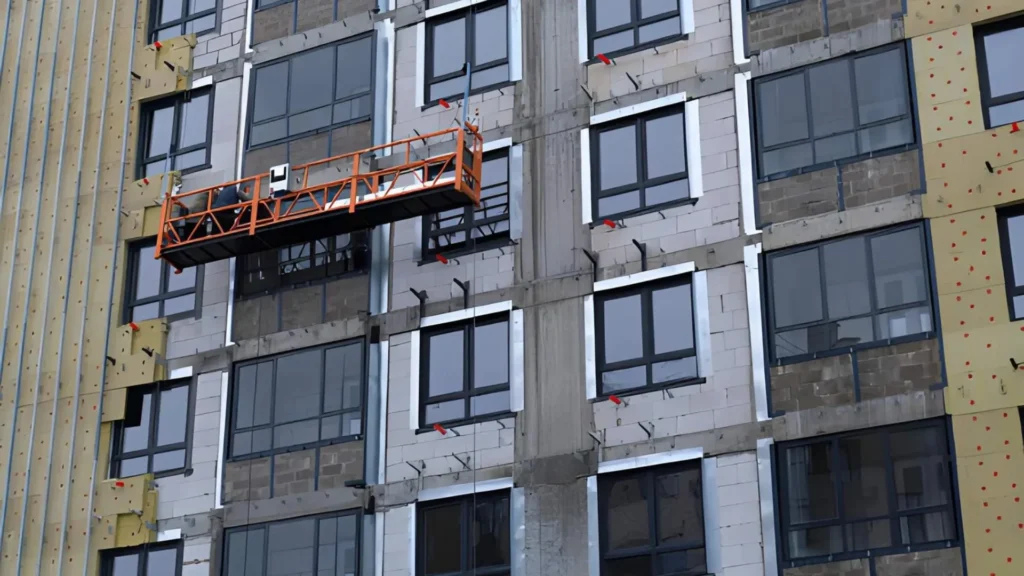
Suspended scaffolding is a work platform that hangs from the roof. The rig sits at the roof edge, wire ropes drop down the wall, and hoists move the platform along them to whatever floor the job needs. No tower rises from the street.
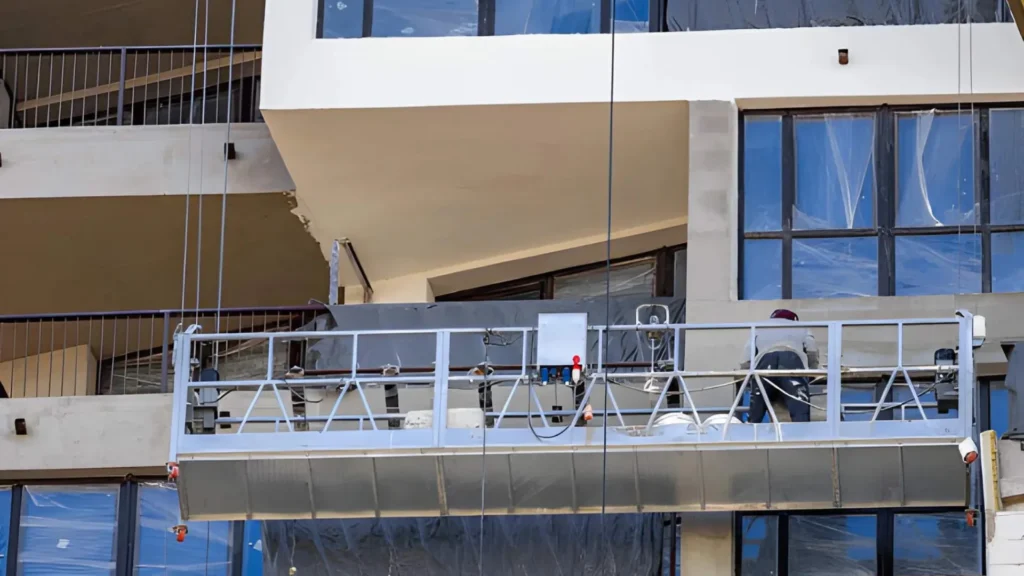
DOB calls these hanging scaffolds, and the trade calls the most common type a swing stage. OSHA’s formal name for a swing stage is a two-point adjustable suspension scaffold.
Supported scaffolding, including pipe scaffolding, stands on the ground or a base and climbs the wall. A swing stage hangs from above and travels along it.
OSHA sorts suspended platforms by how many ropes hold them, and the trade adds its own names.
Most facade work happens on this one. The platform hangs from two ropes, one at each end, and crews run the hoists together to keep it level as it travels the wall. The trade says swing stage, and British crews say cradle.
More than two ropes carry the platform, so it spans a long stretch of wall and crews cover a wide elevation in one setup.
One rope carries everything. OSHA calls the seat version a boatswain’s chair. Crews use this type for a single window, one cracked lintel or an inspection at one spot.
Electric traction hoists grip the wire rope and drive the platform up and down. This type fits repeated passes over the same elevation.
DOB lists three ways to support the ropes: outrigger beams, C-hooks and davit structures. The table shows each rig part and the OSHA rule behind it.
| Part | What It Does | Rule That Applies |
|---|---|---|
| Outrigger Beams and Counterweights | Beams extend past the roof edge and carry the suspension ropes, while counterweights help keep them secure. | Mechanical means must secure counterweights to the beams. Supports and direct connections must hold at least four times the load or tipping moment. (OSHA 1926.451) |
| Parapet Clamps and C-Hooks | Hooks or clamps secure the support over the parapet. | DOB requires notice before crews use them. |
| Tiebacks | Each beam is tied back to a solid roof anchor point to prevent movement. | Tiebacks must match the strength of the suspension ropes. |
| Suspension Ropes and Hoists | Ropes support the platform, and hoists raise and lower it. | Ropes must support at least six times the maximum intended load. |
| Lifelines | Each worker's personal fall-arrest system connects to its own vertical lifeline. | Lifelines must be anchored independently of the scaffold. Lifelines, support lines, and suspension ropes must each have their own anchor point. |
The NYC DOB suspended scaffold regulations in one table, each tied to its source.
| Requirement | What Applies | Source |
|---|---|---|
| Supervision | A licensed rigger, licensed sign hanger, or designated foreman must remain on site at all times. | DOB Suspended Scaffold Tips |
| Rigger | Must hold a DOB license. | DOB Suspended Scaffold Tips |
| Foreman | Must complete a 32-hour DOB-approved course and carry a DOB ID card. | DOB Suspended Scaffold Tips |
| Workers | Must complete a 16-hour DOB-approved course and hold a Certificate of Fitness from the supervising licensed rigger or sign hanger. | DOB Suspended Scaffold Tips |
| Filing | New filings go through DOB NOW: Build. A licensed rigger, licensed sign hanger, or registered design professional (PE/RA) can serve as the applicant of record. | DOB Service Notice, Nov. 1, 2023 |
| Notice | DOB must be notified before outrigger beams or C-hooks are put into use. | DOB Suspended Scaffold Tips |
| Fall Protection | Workers on two-point suspension scaffolds need a personal fall-arrest system and a guardrail system. | OSHA 1926.451(g)(1)(ii) |
The 2023 change took effect November 15 and replaced the CD-5 and PW1 forms for new filings, so guides that still describe a paper drop-off are out of date.
Credentials decide whether the job can legally go up, so ask before you sign.
Any provider should answer all five before the stage goes up, and we will too.
ABC Sidewalk Shed & Scaffolding works under another license
We run swing stage jobs under the NYC DOB [type] license of [firm name], no. [#]. That licensed rigger supervises on site and files the application, and you get both firms’ details before work starts.
Questions about who can hang a stage on your building? Call (718) 581-4370.
Six steps take the job from the first roof visit to the last drop.
Work over a public sidewalk may also need cover below, so we build a sidewalk shed under the same scope. For jobs we have completed, see recent projects.
Five factors set the price, and the quote starts from your address.
Swing stage rental cost follows these factors:
Send the address, height, roof type and number of drops and we price it. For pricing across systems, see scaffolding rental costs.
Call when a platform stalls on the wall, a rig looks unsafe or a DOB order lands. Our line answers 24/7. Response and arrival times depend on location, site conditions and crew availability. If a stop work order or violation brought you here, send us the notice and the address. We review it and explain what filing or site work may follow. DOB decides every outcome, so we promise none.
Emergency? Call (718) 581-4370 any hour.
FAQs
A licensed rigger or licensed sign hanger supervises installation, and a trained foreman with the 32-hour DOB course and a DOB ID card can supervise operations on site. Filing goes to a licensed rigger, licensed sign hanger or registered design professional.
Workers complete a 16-hour course from a DOB-approved provider and hold a Certificate of Fitness from the licensed rigger or sign hanger overseeing the work. Foremen complete a 32-hour course and carry a DOB ID card.
Yes. Since November 15, 2023, new filings go through DOB NOW: Build, and the applicant of record can be a licensed rigger, licensed sign hanger or registered design professional (PE/RA). DOB also needs notice before outrigger beams or C-hooks go into use.
Supported scaffolding stands on the ground or a base and climbs the wall. Suspended scaffolding hangs from the roof and travels along it. Pick supported for lower or irregular facades, and pick suspended when a tower would run too tall or block the sidewalk.
Price follows the number of drops, the building’s height, the roof rigging, the job’s length and the filing. Send the address and roof type and we quote it. Our scaffolding rental costs page covers pricing across systems.
Yes. We work in Manhattan, Brooklyn, the Bronx, Queens and Staten Island. See areas we serve for your borough.
Get Started
A phone photo of the roof edge and the wall is enough to start. Add the building’s height if you know it. We call you back to say which stage type fits and what the rigging needs. For a full quote, have the borough, height in stories, roof type (parapet or setback), number of drops, work planned and start date. The roof decides the rigging, so these details save a site visit.
ABC Sidewalk Shed & Scaffolding provides licensed, insured overhead protection and scaffolding systems across all five NYC boroughs. Serving building owners, property managers, and general contractors with DOB-compliant installations and 24/7 emergency dispatch since 2004.
Copyright © 2026, All rights reserved.