Our crew delivers and places concrete and plastic barriers for work zones and pedestrian routes in all five boroughs, and has worked in NYC since 2004.
Any work zone beside traffic needs a hard edge. That’s what we supply with jersey barrier rental, for contractors and building owners in Manhattan, Brooklyn, the Bronx, Queens and Staten Island. Our crew brings the barriers and sets them on your line.
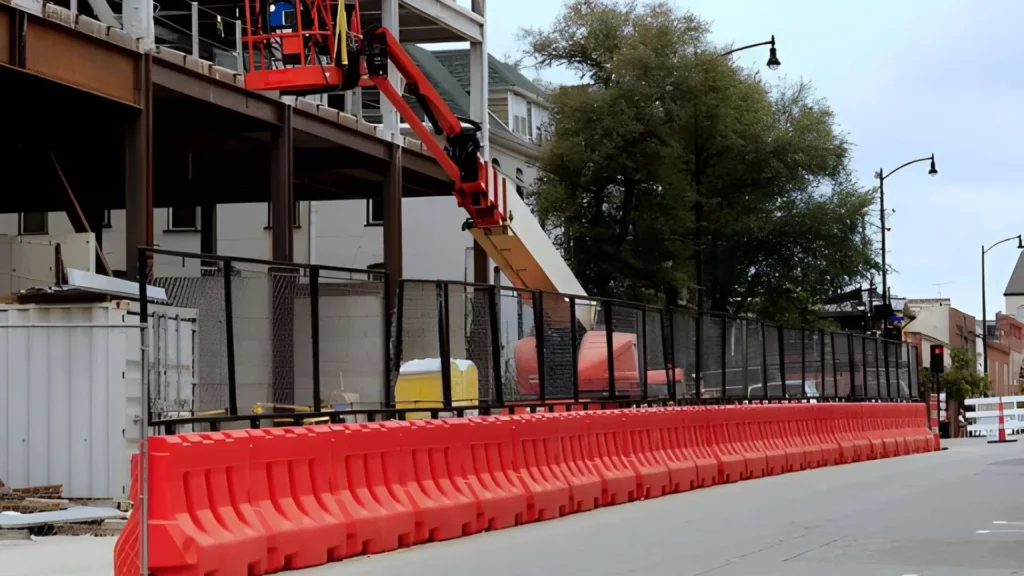
General contractors put them around excavations and hoisting zones, and along lane closures. Owners use them to wall off a facade or roof job, a loading area or a hazard. A lot of these sites need more than barriers, so we also build temporary fencing and sidewalk sheds around the same job.
Two things pick the type: how long the barrier stays and what it has to hold back.
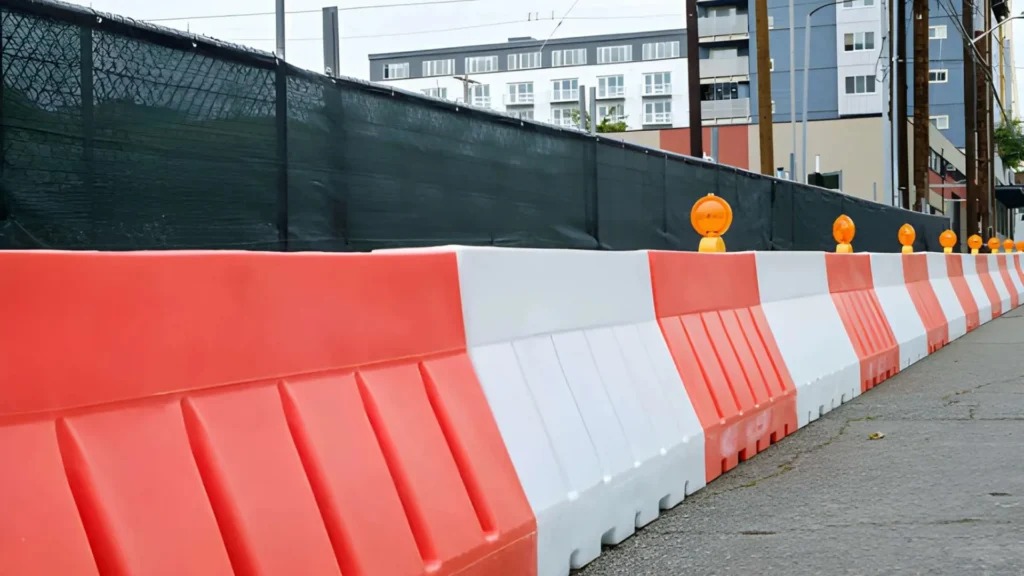
Precast concrete in the New Jersey profile holds its ground by weight alone. That suits longer rentals and some vehicle-side work zones, depending on the site and the protection it needs.
Plastic barriers arrive light, and crews fill them with water on site. Light barriers work best on short jobs, in tight access and at spots a heavy truck can’t reach.
Need more height? Fence panels mount on top of a barrier, which works for a site perimeter or a screen along a pedestrian route.
Start with the row that matches your site.
| Placement | Settle This First |
|---|---|
| Street or Travel Lane | A DOT permit for placing equipment on the street, followed by confirmation of the delivery window. |
| Sidewalk | A clear pedestrian route, followed by confirmation of whether the placement requires a DOT permit. |
| Private Lot | Truck access, followed by confirmation of your site's DOB filing requirements. |
Send the address and a photo of the spot. We read the street and tell you what to order.
Tell us the street address, the cross street and where the truck can pull in: a curb, an alley, a loading dock. The truck route comes first. Then we set the barriers on your line, link them end to end and lock in a date with you.
Barriers on a street or sidewalk usually fall under a DOT permit. The table shows which placements do.
| DOT Lists This as Needing a Permit | Where Barriers Usually Fit |
|---|---|
| Placing or Storing Construction Material or Equipment on the Street | Barriers set in a parking lane or travel lane. |
| Temporarily Closing the Sidewalk or Roadway | Barriers that cordon off a sidewalk or traffic lane. |
| Building a Temporary Pedestrian Walkway in the Roadway | Barriers that separate a temporary walkway from traffic. |
Contractors and developers request these as Building Operations and Construction Activity permits through the NYCStreets Permit Management System, and the Street Works Manual explains each one. DOT’s permit pages describe materials, equipment and temporary structures in general terms, so confirm your exact placement with the DOT before delivery.
We prepare DOB filings for our scaffold and shed work, so the DOB side of a shed-and-barrier job stays with us. For the street side, send us the location and we help you work out what to confirm with the DOT. The DOT and DOB decide approvals, so we promise none.
We quote each rental by address, because five things move the price:
Give us the five and the quote lists each item on its own line.

One job often needs three layers. Barriers hold back traffic, temporary fencing closes the site, and a sidewalk shed covers pedestrians below facade or construction work. We build all three, so one call covers the work zone.
An unsafe condition or a DOB order cannot wait for business hours. Call (718) 581-4370 at any hour and tell us what happened and where. Arrival time depends on the site’s location, its conditions and crew availability, and we tell you what we can place and when.
FAQs
Barrier count, type, rental length, delivery and placement, and permit needs set the price. We quote by address and list each item.
Possibly. The DOT requires a permit to place or store construction material or equipment on a street, to close a sidewalk or roadway temporarily and to build a temporary pedestrian walk in the roadway. Send us the location and we’ll help identify which DOT requirements you need to confirm before delivery.
Concrete barriers suit longer jobs and some vehicle-side work zones, depending on the site and protection requirements. Plastic suits short jobs and tight access, where a light barrier is easier to set. Describe the site and we recommend one.
Yes. We deliver them, set them on your line and connect them end to end.
Give us your start date and how long the work runs, and the quote covers that term.
Yes. We serve Manhattan, Brooklyn, the Bronx, Queens and Staten Island. See areas we serve for your borough.
Get Started
Send the address, the borough and the type of work, and we tell you which barriers fit and what else the site needs. Prefer to talk? Call and describe the job.
ABC Sidewalk Shed & Scaffolding provides licensed, insured overhead protection and scaffolding systems across all five NYC boroughs. Serving building owners, property managers, and general contractors with DOB-compliant installations and 24/7 emergency dispatch since 2004.
Copyright © 2026, All rights reserved.